
Algae on External Walls in Singapore: Causes & Fixes
A wall that was clean last year is now streaked green. A boundary wall has gone black on one side and stayed pale on the other. A patch under a window keeps coming back a few months after the last wash. In Singapore, algae on external walls is one of the most common things owners ask us about, and one of the most commonly misread.
Here is the direct answer first, then how to tell ordinary growth from a warning sign, and what actually removes it for more than a season.
The short answer
Algae grows on external walls in Singapore because the climate gives it everything it needs: constant humidity, warm temperatures all year, frequent rain and plenty of shaded, slow-drying surfaces. On most walls it is a cosmetic problem, not a structural one.
The exception matters, though. When growth follows a defined pattern, a streak below a joint, a band above the ground, a patch that is always in the same place, it is usually telling you that water is sitting on or in that part of the wall for longer than it should. In that case the algae is a symptom, and cleaning it alone will not fix anything.
So the useful question is not "how do I remove this", it is "why is this part of the wall staying wet".
Why walls in Singapore go green so quickly
Algae is airborne. The spores are everywhere in a tropical city, and they will settle on any exterior surface. Whether they establish and spread comes down to four things, and our climate supplies all of them generously.
- Moisture that lingers. Humidity here rarely drops far enough for a shaded wall to dry out fully between showers. A surface that stays damp for hours at a time is a surface algae can live on.
- Warmth. Temperatures sit in the growth range all year. There is no cold season to knock growth back, which is why walls here green up faster than the same walls would in a temperate climate.
- Shade and orientation. North-facing elevations, walls shaded by mature trees or a neighbouring block, and the underside of ledges and drip lines all dry slowest. That is usually where you see growth first.
- A surface it can grip. Porous render, textured coatings, weathered paint and bare concrete hold moisture and give spores somewhere to anchor. Smooth glass and clean cladding shed both water and spores far better.
Put those together and a shaded, textured, slow-drying wall in Singapore is close to an ideal habitat. Growth on that wall is normal. It does not mean the building is failing.
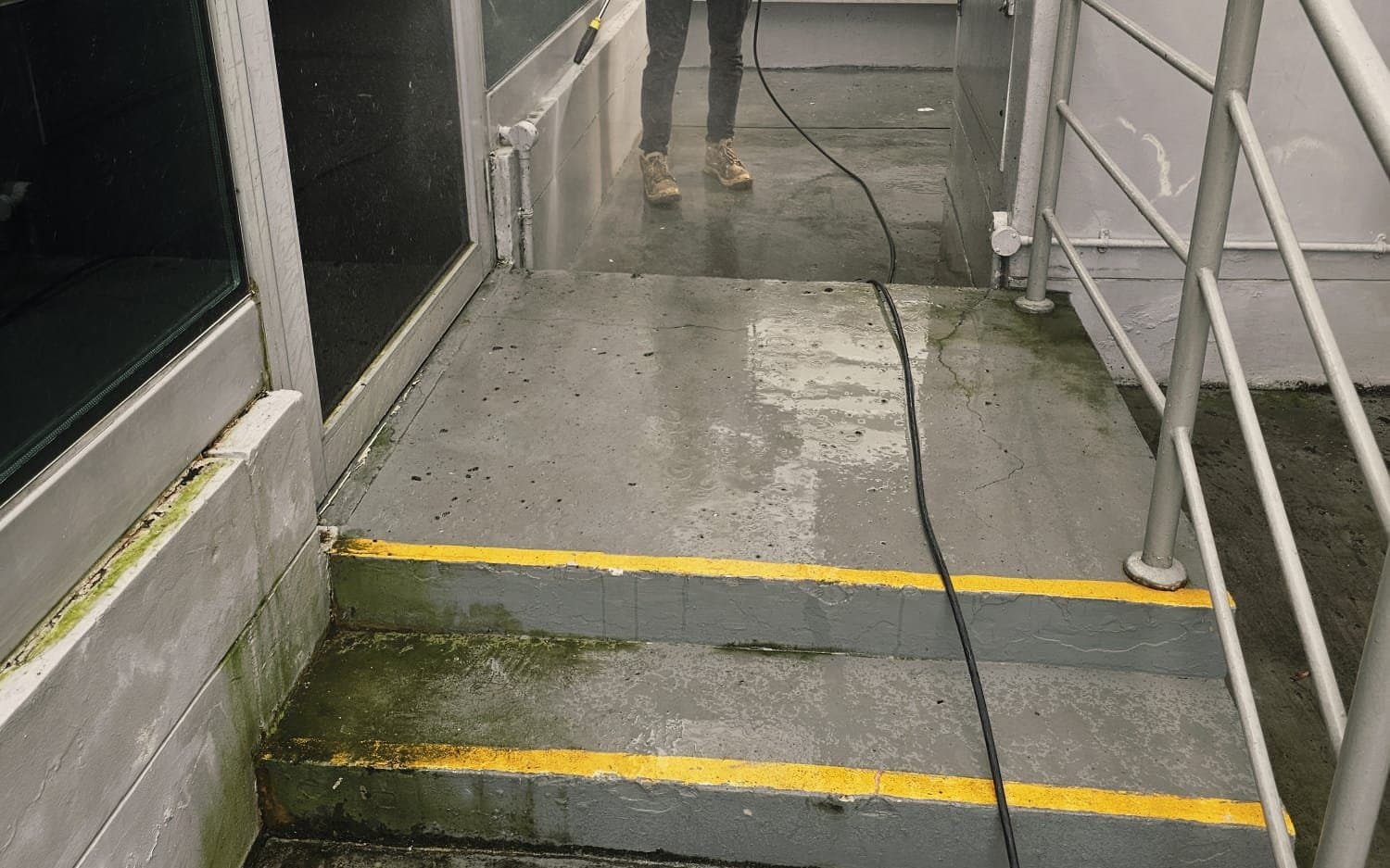
Hydroseal technician pressure washing green algae growth from an external wall base and concrete steps at a building in Singapore
Green, black or brown: reading the stain
Not everything growing or staining on a wall is the same thing, and the colour is a reasonable first clue.
Green is typically algae. It spreads as a film or a soft blush across a whole area, favours shade and damp, and is the growth most people mean when they say their wall has gone green.
Black and dark grey can be several things. It may be a darker algal or fungal growth, but on roadside and lower elevations it is very often carbon staining from traffic and exhaust, which is dirt rather than a living organism. The two need different treatment, so it is worth confirming which you have before anyone starts washing.
Reddish or rust-coloured streaks usually point to metal somewhere above: a fixing, a bracket, a railing or a reinforcement bar close to the surface. Rust streaking below a soffit or balcony edge deserves a closer look, because it can be an early hint of spalling concrete rather than a cleaning issue.
Chalky white deposits are not growth at all. That is usually efflorescence, mineral salts carried out of the concrete or render by moisture moving through the wall and left behind as the water evaporates. Where it appears, water is genuinely travelling through the structure.
When algae is just algae, and when it is a warning
This is the part worth spending a minute on, because it is the difference between a wash and a repair.
Growth that covers a whole shaded elevation fairly evenly is almost always just the climate at work. Clean it when it starts to look untidy and move on.
Growth that is localised and repeats in the same place is a different conversation. The patterns we treat as signals when we survey a building are:
- A vertical streak running down from a joint, a window corner or a cladding seam. Water is escaping at that point and running down the face. On a high-rise, that often traces back to a failed weather seal, which we cover in why high-rise façades leak in Singapore.
- A band along the bottom of a wall. Splash-back and standing water at the base, sometimes with a blocked or badly falling drain nearby.
- A patch around a pipe, an aircon bracket or a fixing. Every penetration through a wall is a potential entry point, and a wet ring around one is a fair indication it is not sealed.
- Growth on an elevation that gets plenty of sun. If a wall that should dry quickly is still supporting growth, something is keeping it wet from behind rather than from the weather.
- Damp or stained plaster on the matching internal wall. That combination moves the problem out of cleaning entirely and into external wall seepage repair.
If any of these describe your wall, cleaning it will make it look better for a while and then the same patch will return, because the water source is untouched.
Does algae actually damage a wall?
On its own, algae is mostly a cosmetic and hygiene problem. It does not eat concrete, and a green wall is not a structurally compromised wall.
It is not entirely harmless either. A living film holds moisture against the surface instead of letting it dry, which keeps the coating damp for longer and shortens its life. Over years, that contributes to a paint film breaking down, chalking and eventually letting water into the render behind it. Growth on steps, ramps and walkways is also genuinely slippery when wet, which on a commercial property is a safety matter rather than an appearance one.
The bigger risk is the one above: treating growth as purely cosmetic when it is actually marking a leak that is quietly wetting the structure.
How external wall algae is properly removed
Removal is straightforward when it is done in the right order. The mistakes we are called in to correct almost always come from skipping a step or over-doing the pressure.
Survey first. Identify what you are actually looking at, check the substrate, and note any defects, cracks, failed sealant or open joints, before water goes anywhere near the wall. Washing a wall with an open joint in it simply pushes water inside.
Wash at a pressure the surface can take. This matters more than people expect. Calibrated pressure lifts growth and dirt without eroding render, stripping sound paint or driving water past window seals. Blasting a soft render or an aged coating at full pressure does visible damage in seconds and can turn a cleaning job into a repainting job.
Treat the growth, do not just knock it off. Water alone removes the visible film and leaves the roots and spores in the pores of the surface, which is a large part of why growth returns so fast. An appropriate biocidal treatment, left to dwell and then rinsed down, gives a noticeably longer clean.
Rinse down evenly and check the result dry. A wall that looks clean while wet can dry patchy. Working elevation by elevation and finishing each one properly is what gives a uniform appearance rather than a blotchy one.
On low walls, boundary walls and landed homes, much of this is accessible from the ground. On a condominium block or a commercial tower it is not, which is where high-rise façade cleaning by rope access comes in. Our IRATA-certified technicians abseil each elevation and reach the fins, ledges, recesses and drip lines that a gondola tends to miss, without scaffolding and without closing the building.
Why it comes back, and how to slow it down
Nothing keeps a Singapore wall permanently algae-free. The realistic goal is a longer interval between cleans, and there are a few things that genuinely extend it.
Fix the water first. If the growth is following a defect, seal the joint, repair the crack or clear the drain before you clean. Everything else is temporary until that is done.
Help the wall dry. Trimming back planting that presses against a wall or blocks air movement makes a real difference on shaded elevations. So does making sure drip edges and ledges actually shed water clear of the face instead of letting it run back.
Recoat with something appropriate. A good exterior coating system sheds water rather than holding it, resists growth better than a tired chalking film, and bridges the hairline cracks that let moisture into the render. When a wall is due for cleaning and the coating is also at the end of its life, doing both together is usually better value than doing them two years apart. That is the thinking behind our high-rise exterior painting work.
Put it on a cycle. Buildings that clean on a planned interval, rather than waiting until the façade looks bad, spend less over time and never let growth get established enough to need aggressive treatment.
Common questions
Is algae on my external wall a sign of a leak? Not usually. Even growth on a shaded, slow-drying wall is normal in Singapore's climate. It is a possible sign of a leak when the growth is localised and repeats in the same spot, particularly as a streak below a joint or window, a band at the base of the wall, or a patch on an elevation that gets good sun.
Can I remove algae from my wall myself? On a low, accessible wall in sound condition, yes. Use a modest pressure setting, work from the bottom up and rinse from the top down, and treat the surface rather than just blasting it. Do not do it yourself on aged render, on anything above easy ladder height, or on a wall with cracks or failed sealant in it.
Will pressure washing damage my paint or render? It can, easily. Too much pressure strips sound coating, erodes soft render and forces water past window and joint seals into the building. Matching the pressure to the surface is the single most important part of doing this well, which is why we survey before we wash.
How often should external walls be cleaned in Singapore? It depends on shade, orientation, tree cover and how exposed the elevation is, so there is no single figure. Shaded elevations need attention noticeably sooner than sunny ones. The practical answer for most buildings is to plan a cycle based on how the worst elevation performs, rather than the best.
Is bleach safe to use on external walls? Household bleach will kill surface growth, but it also runs off onto planting, paving and metalwork, can lighten coloured coatings unevenly, and does little about growth sitting deeper in a porous surface. A treatment formulated for masonry, correctly diluted and properly rinsed, is a better outcome on anything you care about the appearance of.
Does algae on a wall mean the waterproofing has failed? Not by itself. Waterproofing protects against water getting into and through the structure, and general surface growth is a weather-and-shade issue rather than a waterproofing one. If the growth comes with damp or staining on the matching internal wall, then the wall is letting water through and that is a waterproofing question. Our guide on how to spot water damage in your home covers what else to look for.
A simple takeaway
Green walls are part of building ownership in Singapore. Most of the time, algae is the climate doing what the climate does, and the right response is a properly done clean at sensible intervals rather than anything dramatic. The time to look harder is when the growth is picky about where it sits, because a wall that is only wet in one place is usually wet for a reason.
Hydroseal has been waterproofing, cleaning and repairing Singapore's buildings since 1995, and our IRATA-certified rope-access teams reach the elevations that are hardest to inspect. If you are not sure whether your stained wall needs a wash or a repair, we are happy to look at it first at no cost. Call us on +65 6289 6811 or email enquiry@hydroseal.com.sg to arrange a free, no-obligation site inspection.
Unsure about your property’s waterproofing?
Hydroseal offers a free, no-obligation site inspection, honest advice, no pressure.
Get a free quote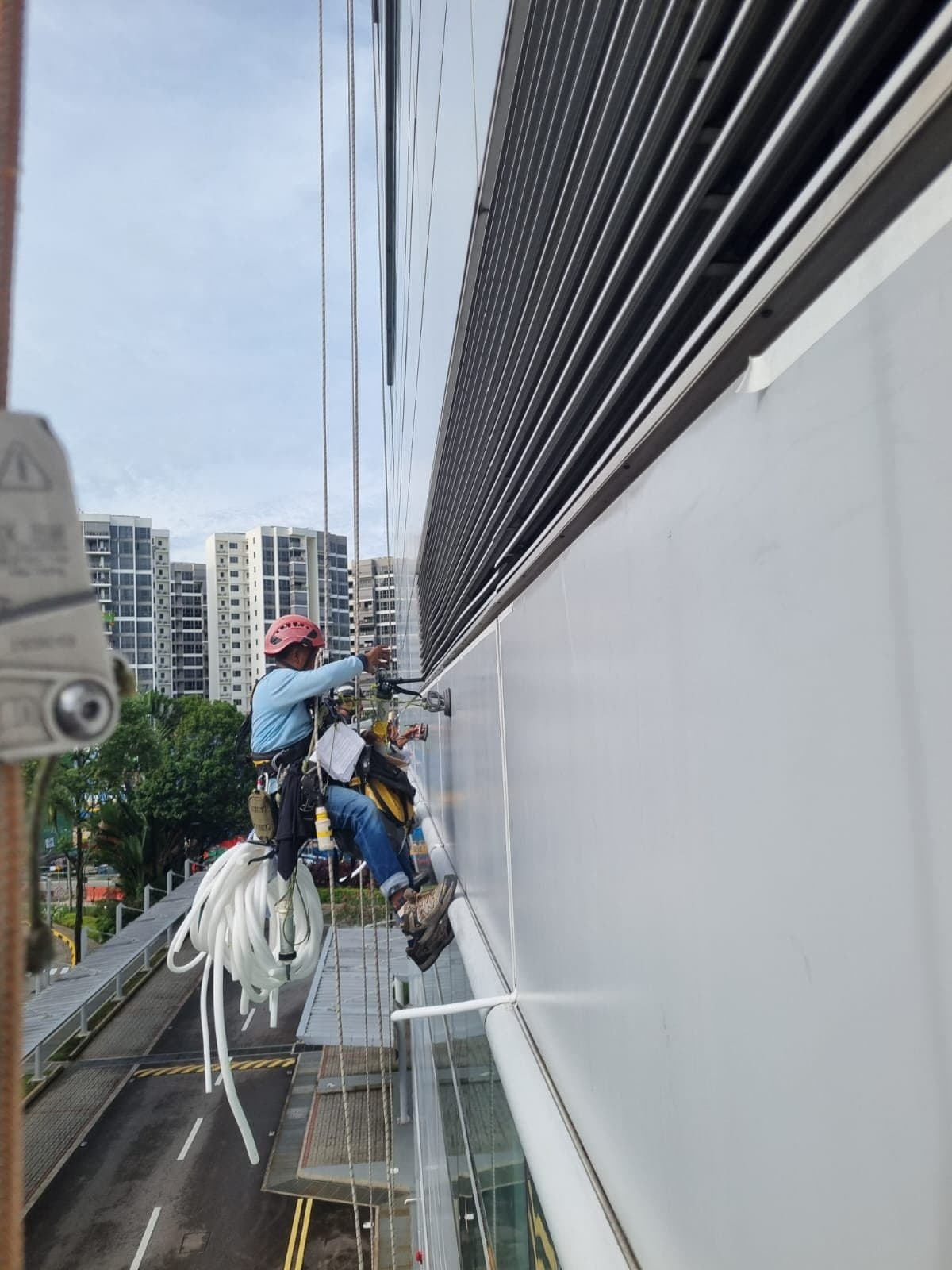
Get a free, no-obligation site inspection
Tell us what’s going wrong and we’ll diagnose the cause, explain your options in plain language, and quote, with no pressure to proceed.
Prefer to talk? Call +65 6289 6811 · We respond within 1 business day.