
7 Common Waterproofing Materials Used in Singapore
There is no single "best" waterproofing material, only the right one for a particular surface, exposure and budget. In Singapore's climate of intense UV, year-round humidity and heavy monsoon rain, choosing the wrong system is a common reason repairs fail early. Here are seven materials waterproofing contractors use most often, and where each one fits.
1. Torch-on (bituminous) sheet membrane
A pre-formed bituminous sheet that is heat-bonded to the surface with a torch. It is thick, consistent and very durable, which makes it a workhorse for RC flat roofs and large decks. Because thickness is built into the sheet, it gives reliable protection over big areas.
2. Liquid-applied membrane
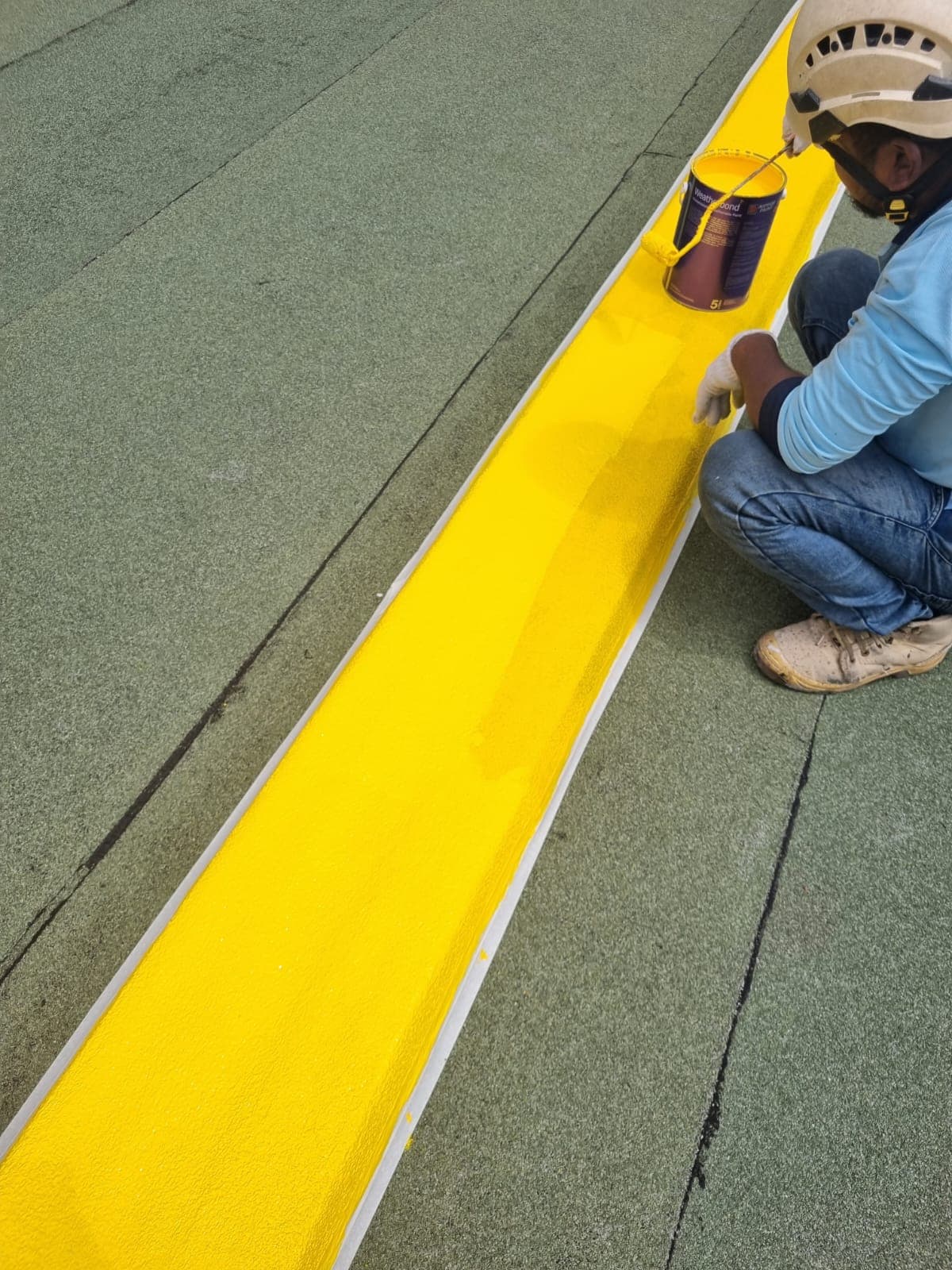
A coating that is rolled or sprayed on and cures into a seamless film. Its great strength is detailing, it wraps around upstands, pipes, drains and awkward corners with no joints to fail. It is ideal where a roof or deck has lots of penetrations.
3. Cementitious waterproofing
A cement-based coating that bonds strongly to concrete. It is widely used for bathrooms, planters, water tanks and wet areas because it is durable, can take tile over it, and suits both internal and external surfaces.
4. Crystalline waterproofing
A reactive cementitious system that grows crystals inside the concrete's pores, sealing it from within and self-sealing fine hairline cracks. Because it becomes part of the concrete, it is excellent for basements, tanks and structures that must hold water.
5. Polyurethane (PU) grouting / injection
PU resin injected into cracks and joints, where it reacts and expands to seal the water path. This is the basis of most non-hacking leak repairs, stopping a leak without removing tiles or finishes. For a deeper look at how this works, see our explainer on what PU grouting is and the trade-offs in our guide to hacking versus non-hacking waterproofing.
6. Bituminous / acrylic protective coating
Applied as a protective top layer, often on metal roofs, to re-seal seams and fasteners and shield the surface from UV and rain. Reflective versions can also reduce roof-surface heat.
7. Nano / penetrating sealers
Penetrating treatments that reduce a surface's water absorption while letting it breathe. They are useful on porous façades and masonry as part of a wider waterproofing strategy.
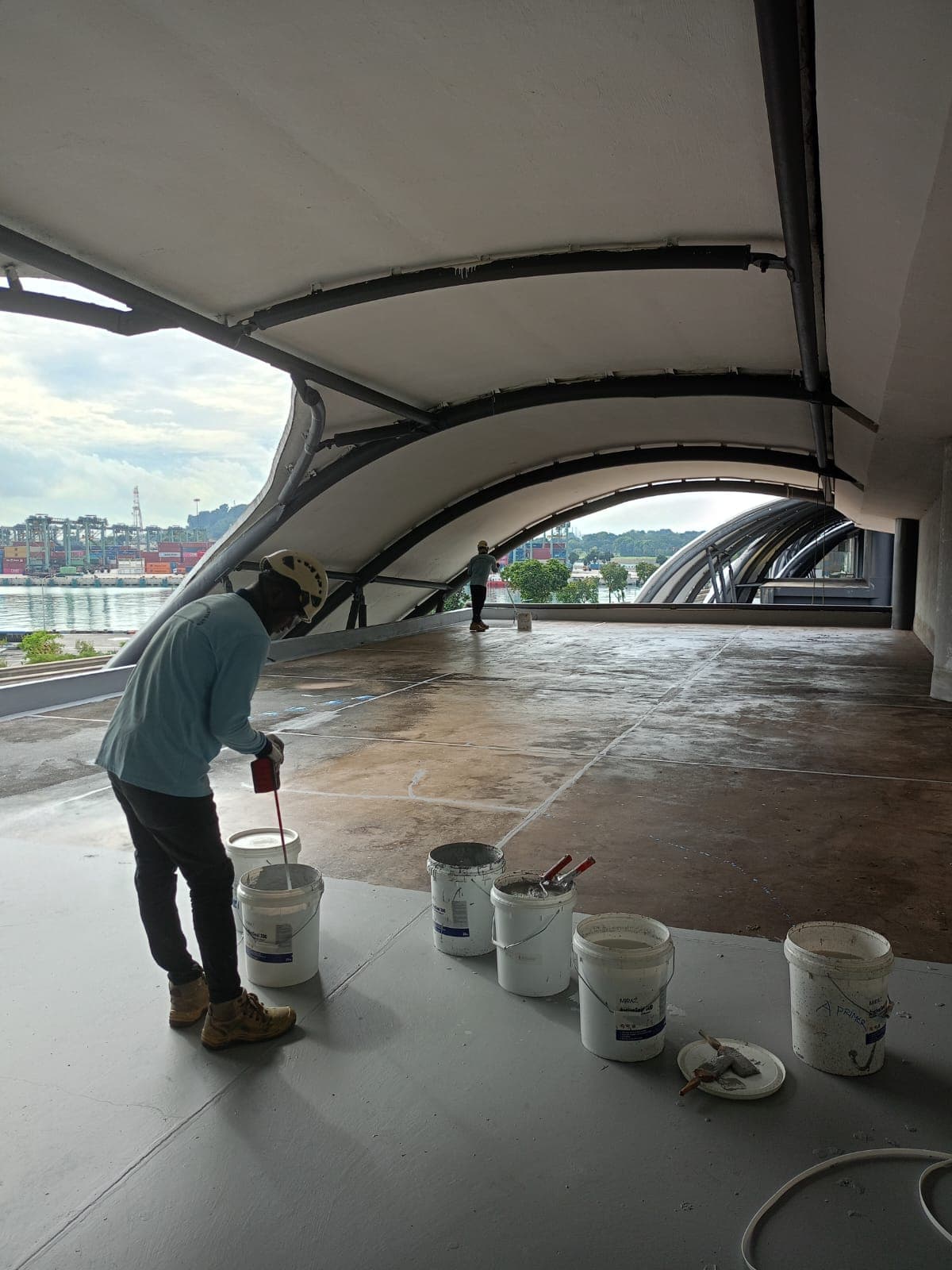 A waterproofing system being applied to a concrete deck in Singapore
How Singapore's climate shapes material choice
Material performance in Singapore is not the same as in a temperate country, and that changes which products make sense. Year-round humidity rarely lets a wet substrate dry out fully, so systems that tolerate residual moisture (such as cementitious and crystalline coatings) tend to bond more reliably to local concrete. Intense, near-equatorial UV is hard on anything left exposed, which is why bare bituminous and PU coatings on a flat roof usually need a UV-stable top layer or a screed over them rather than being left open to the sky.
Heavy monsoon downpours also mean water sits and ponds rather than running off quickly, so detailing at upstands, drains and gutters matters as much as the membrane itself. This is a common theme across our residential waterproofing and commercial waterproofing work: the right material on a poorly detailed junction will still leak. If you own or manage a strata property, it is also worth knowing how shared-area leaks are handled, which we cover in our piece on who is responsible for a condo ceiling leak.
Matching the material to the problem area
In practice, the surface and the failure point usually point to one or two suitable systems rather than a free choice from all seven.
- Flat RC roofs and large decks lean towards torch-on sheet or a liquid membrane with a protective screed, the focus of our roof waterproofing and repair work.
- Bathrooms and wet areas are typically cementitious under tile, often paired with a liquid membrane at the upstands. If you are seeing the early symptoms, our guide to the signs of bathroom water damage helps you act before it spreads.
- External walls and façades combine penetrating sealers, sealant repair and crack treatment rather than a single coat, which is the realm of external wall seepage repair.
- Active leaks through cracks are usually addressed by PU injection from the wet side, with the membrane renewed afterwards.
Choosing well also means choosing the right contractor and approach, which we walk through in our guide on how to choose a waterproofing contractor in Singapore. For a closer look at the two main membrane families, see our guide to sheet vs liquid waterproofing membranes.
Common questions
What is the most common waterproofing material used in Singapore? There is no single dominant choice, but cementitious coatings are very widely used for bathrooms, planters and wet areas, while torch-on sheet and liquid membranes are the usual choice for flat roofs and decks. The right material always depends on the surface and exposure.
How long do waterproofing materials last in Singapore's climate? Lifespan varies by system and exposure, but a properly installed roof membrane that is protected from direct UV generally lasts many years before renewal, while exposed coatings degrade faster under constant sun and rain. Regular inspection and prompt repair of small defects extend the life of any system.
Can I waterproof without hacking up tiles? Often yes. Crack-related leaks are commonly sealed by PU grouting injected from the wet side, which avoids removing tiles or finishes. Whether a non-hacking approach is suitable depends on the cause and location of the leak.
Which waterproofing material is best for a bathroom? A cement-based (cementitious) coating is the usual choice for bathroom floors and walls because it bonds to concrete and accepts tile over it, frequently combined with a liquid membrane at upstands and pipe penetrations for a seamless finish.
The reliable way to choose is a professional assessment of the actual surface and the cause of the problem. Hydroseal offers a free, no-obligation site inspection and will recommend the system that genuinely suits your property, backed by a Certificate of Warranty.
Unsure about your property’s waterproofing?
Hydroseal offers a free, no-obligation site inspection, honest advice, no pressure.
Get a free quote
Get a free, no-obligation site inspection
Tell us what’s going wrong and we’ll diagnose the cause, explain your options in plain language, and quote, with no pressure to proceed.
Prefer to talk? Call +65 6289 6811 · We respond within 1 business day.